

Are Boards hiring for the past or for the future?
31 Jul, 20264-minutes
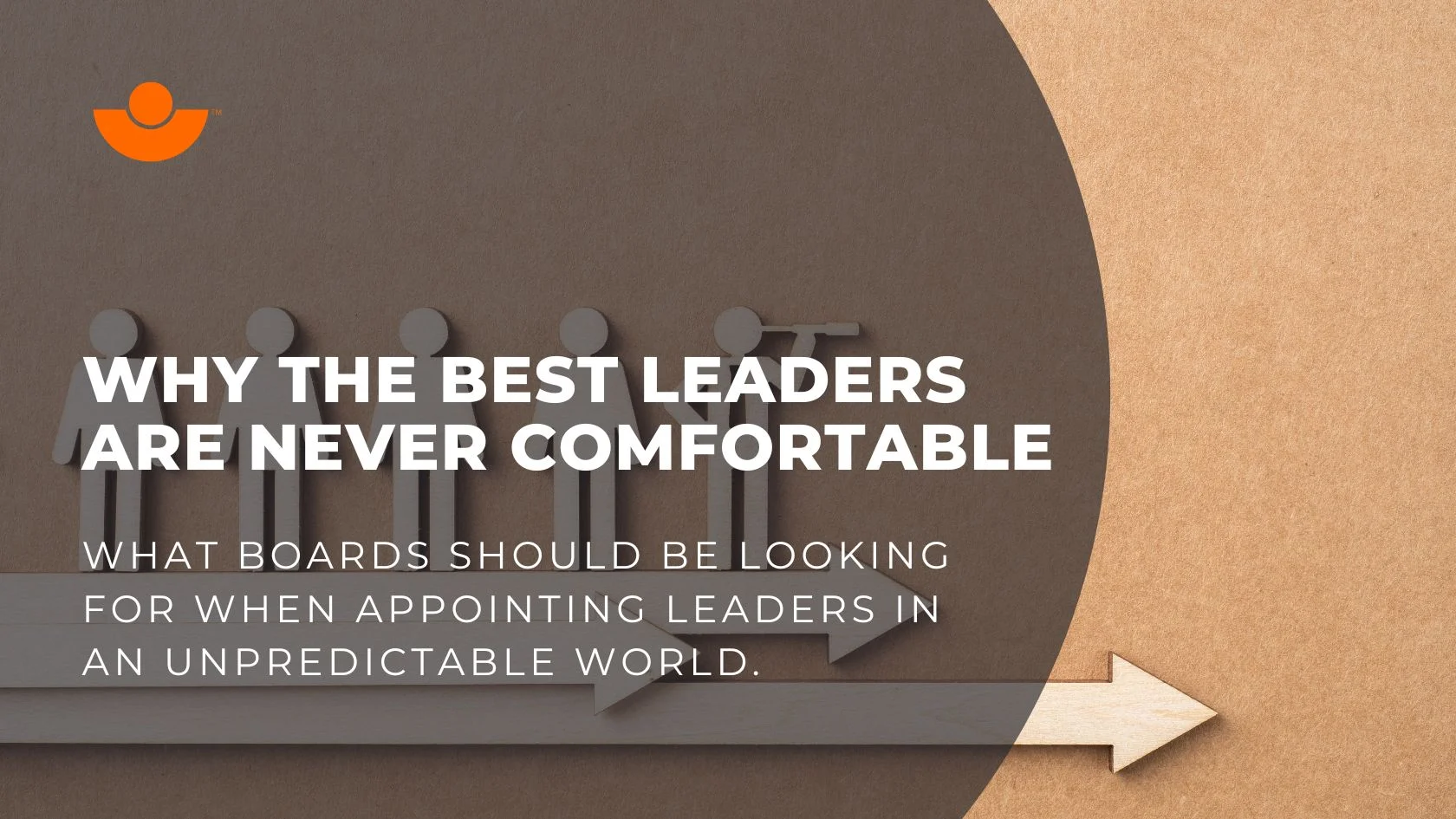
There has never been a more challenging time to predict the future. AI is reshaping industries, geopolitical uncertainty is redrawing global supply chains, regulation is evolving at pace, and entire job functions are being transformed, while new skills emerge almost overnight.
For today's leaders, change is no longer something that happens every few years; we now know it’s the operating environment.
Yet despite this reality, many organisations continue to appoint leaders based primarily on what made them successful yesterday. History tells us that this is often where businesses begin to lose their competitive advantage.
Former Intel CEO Andy Grove captured this perfectly in his classic book Only the Paranoid Survive. His central argument was simple but powerful: success often breeds complacency, and complacency leaves organisations vulnerable when the rules of the game suddenly change.
Grove introduced the idea of Strategic Inflection Points, those defining moments when technology, customer expectations, regulation or competition fundamentally alter an industry. Organisations that recognise these shifts early adapt and thrive. Those that don't are left trying to catch up.
Nearly thirty years later, his message feels more relevant than ever, and as Executive Search professionals, we are witnessing this shift first-hand. Boards are no longer simply asking for leaders with impressive CVs or long lists of achievements. They are asking a far more important question.
Who can lead us through what comes next?
Leadership in an Era of Constant Change
Experience still matters, technical expertise still matters, commercial success still matters, but increasingly, these are simply the entry requirements.
The leaders who create long-term value possess something deeper: the ability to continually adapt while bringing others with them.
The qualities we look for today are remarkably human.
Curiosity
Great leaders never assume they have all the answers; they ask better questions, they actively seek different perspectives, challenge conventional thinking and remain open to learning throughout their careers.
In a world changing faster than ever, curiosity has become one of the greatest competitive advantages.
Courage
Leadership has never required certainty; it requires decisions.
Exceptional leaders are prepared to make difficult choices without having every piece of information. They know when to let go of legacy thinking, challenge established models and create new opportunities before someone else does.
Emotional Intelligence
Technology continues to transform business, but it will never replace trust. During periods of uncertainty, people don't simply follow strategy; they follow leaders they believe in.
Empathy, authenticity and the ability to inspire confidence have become essential leadership capabilities.
Strategic Thinking
The best executives don't simply react to change; they anticipate it, they connect seemingly unrelated trends, recognise emerging opportunities and make decisions that prepare organisations for the future rather than protect the past.
Humility
One of the defining characteristics of modern leadership is the confidence to admit
"I don't know... but we'll find out."
Gone are the days when leaders were expected to have every answer; today's strongest leaders build teams capable of discovering them together.
Building Future Leaders
Great organisations don't rely on one exceptional leader; they develop many, and the thorn in many local organisations' sides is “succession planning”
The executives creating the greatest long-term value are those who invest in people, build capability and leave stronger leadership behind them.
What Boards Should Really Be Assessing
Traditional executive interviews often focus on past achievements, but future performance depends on something different. Increasingly, boards are asking questions such as:
- Tell us about a belief you once held that proved to be wrong.
- Describe a time you completely changed your strategy.
- What assumptions in your industry do you think everyone else is getting wrong?
- How do you continue learning when you're already an experienced leader?
The answers reveal something far more valuable than a polished career history; they reveal how a leader thinks.
The Role of Executive Search is Changing Too
At MCS Executive Search, we believe identifying future leaders requires more than matching experience to a job description. Our role is to understand how leaders think, how they learn and how they respond when certainty disappears.
Experience will always matter, but experience without adaptability quickly becomes history.
The organisations that will thrive over the next decade will be those led by people who combine commercial judgement with curiosity, courage, emotional intelligence and an unwavering commitment to continuous learning.
The responsibility of executive search is therefore not simply to validate a candidate’s record, but to understand whether their judgement, behaviour and capacity to learn are suited to the organisation’s future.
Final Thoughts
Andy Grove famously argued that success can become an organisation's greatest vulnerability because it convinces us yesterday's answers will solve tomorrow's problems.
The same can be said of leadership; the future will not belong to the biggest organisations, nor will it belong to those with the longest history. It will belong to those who learn fastest, adapt earliest and inspire others to move confidently into uncertainty.
The role of executive search is no longer simply to identify proven leaders; it is to identify those capable of leading through whatever comes next.
Because change is no longer an event.
It is the environment.
And the leaders who thrive won't be those who resist it; they will be the ones who anticipate it, embrace it and give others the confidence to do the same.
Ready to Build Leadership for What's Next?
The leaders who delivered success yesterday won't necessarily be the ones who secure your organisation's future. Identifying executives with the adaptability, curiosity and strategic thinking to lead through uncertainty requires a different approach to executive search.
At MCS Executive Search, we partner with boards and leadership teams to identify and appoint leaders who are equipped not only for today's challenges, but for tomorrow's opportunities.
If you're planning a critical executive appointment or reviewing your leadership pipeline, we'd love to start the conversation.
Get in touch with our Executive Search team today to discuss how we can help you find leaders who will drive sustainable growth in an ever-changing world.
Related Posts
Leading the Charge- Harvest McWhirter
03 Nov, 2022

Lead the Charge- Maria McDaid
27 Oct, 2022