
Not Remotely Interested? Belfast Tech Goes Hybrid
26 Jun, 20264-minute read
A few years back, I woke up on a Saturday morning, padded into the spare room with a cup of tea, and the first thing my eye landed on was a wee cluster of yellow and green post-its stuck across my computer screen. Next week's tasks. Monday's jobs, staring back at me on my day off.
There was no dread in it. I've loved my recruitment work for the best part of fifteen years, and I still do. But that was the moment it clicked: I couldn't switch off. The line between work and home had quietly rubbed itself out, and I hadn't even noticed it go. I know now I wasn't on my own in that.
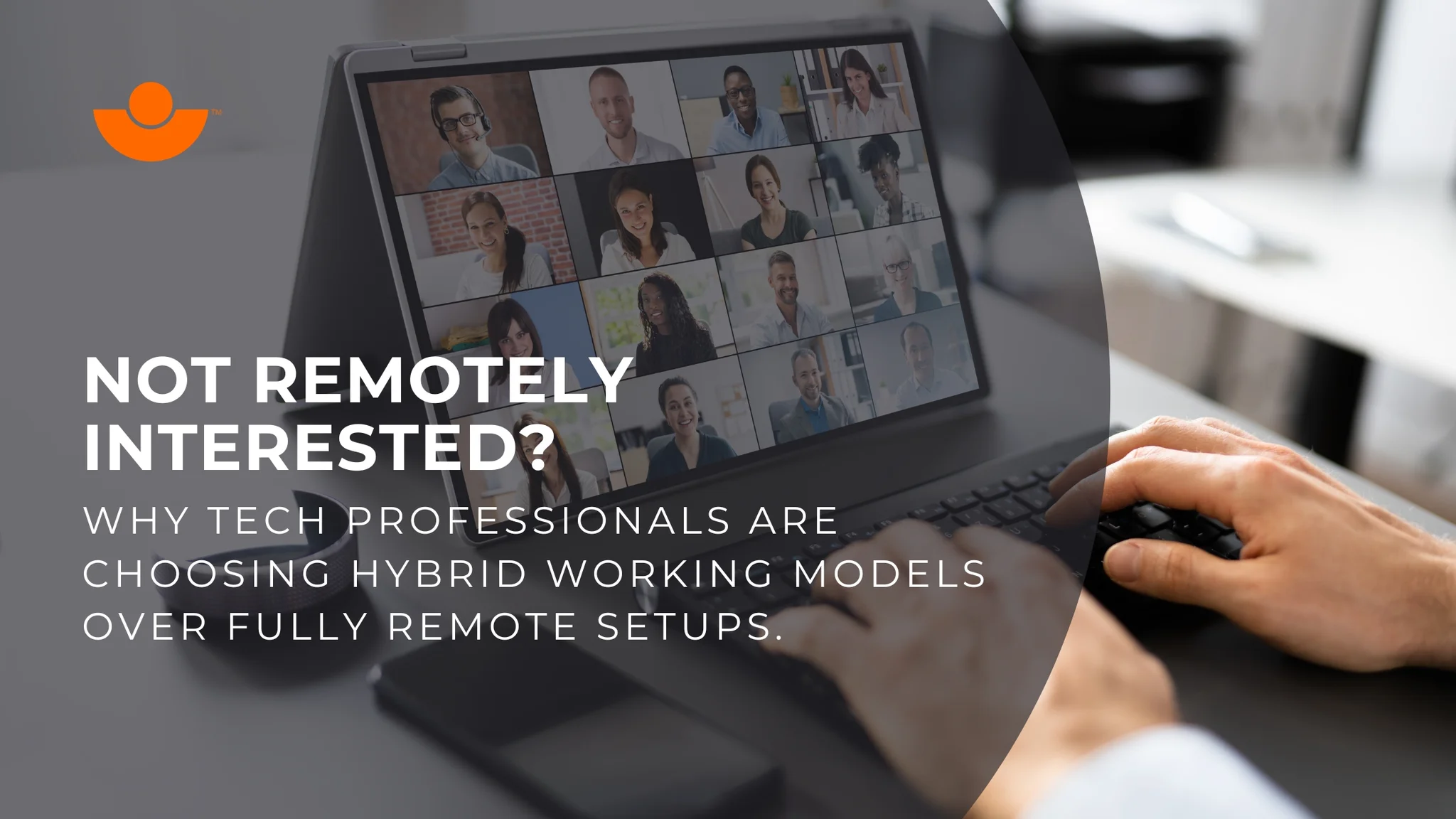
When the offices shut in 2020, working from home felt like we'd all been handed a get out of jail free card. No commute, no traffic on the Westlink, roll out of bed and you're at your desk. For a while there, everyone in the Northern Ireland tech sector wanted it. And then a funny thing happened. A lot of us found out the grass isn't always greener.
I hear it constantly now. I've lost count of the DevOps engineers and cloud platform folk in Belfast who've told me the same thing over the last year or so. One IT contractor I spoke to recently, a seasoned AWS man finishing up a role, put it plainly: he'd take hybrid or on-site over fully remote every time. He likes the change of scenery, he said, so that when he leaves the building he can actually switch off. A lead QA software tester told me much the same a few weeks back. The novelty wore off and the four walls closed in.
Why Fully Remote Working Models Impact Tech Team Culture
The marketing professor Scott Galloway, who's been a guest on The Diary of a CEO, made a point recently that stuck with me. He argues the two worst things to happen to young people are the move away from alcohol and the shift to remote work, because between them they've stripped out the two settings where folk used to find their friends, their mentors and their partners.
Now, I'd part company with him on the drink. Cutting back is a healthy, sensible thing and I'd never knock a soul for it. But the heart of what he's getting at is harder to argue with.
For generations, there were really two places people met their partner and made their mates: the pub and the workplace. Galloway's point is that work in particular is where a lot of that living got done, mentors found, friendships formed, and that young men especially need the guardrails a workplace gives them. Strip those rooms out, and you've taken away the spaces a whole generation grew up in.
The numbers back it up. Stanford research on how couples meet shows that, back in 1995, roughly one in five couples met through work and another one in five met in bars or restaurants. Online dating overtook meeting through friends around 2013 and hasn't looked back. Meanwhile, ONS figures show the number of opposite-sex marriages in England and Wales has halved since 1972, and as of last year fewer than half of UK adults are married at all.
It runs into friendship too. The Survey Centre on American Life found that the share of men with six or more close friends collapsed from 55% in 1990 to 27% in 2021, and the share with no close friends at all rose from 3% to 15%. In 2023, the US Surgeon General went as far as declaring loneliness a public health epidemic, warning that the mortality risk is on a par with smoking up to fifteen cigarettes a day, with around half of adults reporting they feel it.
That's a heavy thing to land on a recruitment blog, I know. But it's all connected. When the shared spaces disappear, connection goes with them.
The Impact of Remote Work on Junior Software Engineers
It's not just the employee side. Talk to enough hiring managers in Northern Ireland, and you hear the same worry: company culture is hard to grow down a webcam.
The casual stuff is what goes first. The by-the-photocopier chat. The junior developer leaning over a desk to ask "how would you do this?" off the cuff. When everyone's remote, that same question now needs a scheduled call, and that wee bit of friction means half the time the question just doesn't get asked. The knowledge that used to pass quietly from desk to desk simply stops passing.
And there's hard evidence for it. Researchers from the Federal Reserve Bank of New York and Harvard tracked software engineers at a large firm and found that those sitting in the same building as their teammates received around 22% more feedback on their code. The juniors gained the most. When the offices closed, it was the youngest engineers and the women who were most likely to leave. The mentorship that builds the next generation of tech talent was happening in the room, and a lot of it stopped when the room emptied.
Why Hybrid Working Models are Winning for Belfast IT Jobs
Here's the good news, and there's plenty of it. The pendulum is swinging back, and it's landing in a sensible spot.
Very few employers in Belfast are mandating five days back at the desk. What's happened instead is hybrid working has quietly become the norm. ONS data shows more than a quarter of UK workers are now hybrid, and most companies are either asking for two or three days in or strongly encouraging it rather than forcing anyone's hand.
The research says that's exactly the right call. A 2024 study in the journal Nature, led by Stanford economist Nicholas Bloom, ran a proper trial across more than 1,600 workers. Those on two work-from-home days a week were just as productive and just as likely to be promoted as their fully office-based colleagues. Resignations fell by a third, and people valued the arrangement about the same as a 10% pay rise. Hybrid keeps the commute-free days people genuinely need, while protecting the in-person time where culture, mentoring and real collaboration actually happen. Fully remote can't give you that second part, and the evidence shows it.
The thing that strikes me most is that candidates and companies have ended up wanting the same thing. That doesn't happen often.
We all went through something together over those few years. We thought remote was the dream, and a good few of us learned otherwise the hard way, post-its on the screen and all. Coming back together, even just two or three days, feels less like a step backwards and more like the workforce healing. We needed the people. Turns out we needed them all along.
Looking for Your Next Tech Role in Northern Ireland?
I spend my days recruiting across the DevOps, cloud, and QA IT markets in Belfast and greater Northern Ireland, so I've a live read on what local candidates actually want versus what global tech headlines say. If you're a Northern Ireland business trying to land on the right hybrid working pattern to retain talent, or you're weighing up a new IT career move in Belfast, give me a shout at MCS Group. I'll give you the real picture, not a guess. Get in touch or explore our latest hybrid roles.